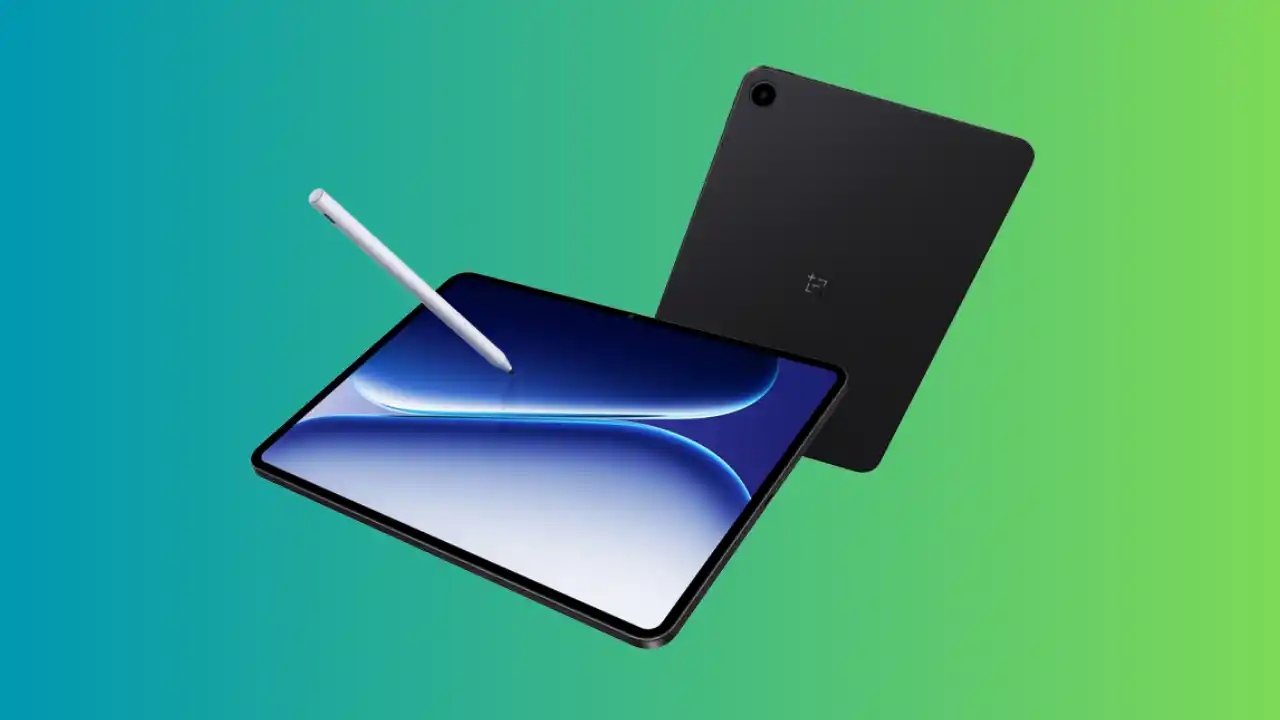
OnePlus is preparing to launch the Pad Go 2, a follow-up to its affordable tablet from last year. At first glance, the name makes it sound like a routine update, but after looking closely at what the device offers, it becomes clear that OnePlus has made several meaningful adjustments. The new model aims to stay budget-friendly while improving the screen, battery backup, connectivity options, and overall usability ahead of its official release on December 17.
Design, Build, and Audio Experience
The Pad Go 2 creates an immediate impression because of how easy it is to hold. At 597 grams, it feels noticeably lighter than many tablets with similar screen sizes, and the weight barely changes if you choose the 5G version. A thickness of 6.83mm keeps it slim without making the frame feel fragile. Two finishes are available—Shadow Black and Lavender Drift—with the darker version keeping things minimal and matte.
OnePlus has gone with a 12.1-inch panel, but its shape stands out more than its size. The company has adopted a 7:5 aspect ratio, which creates a taller workspace compared to the typical 16:10 layout. This makes reading, editing documents, and browsing longer pages feel less cramped. The display pushes a 2.8K resolution, an 88.5% screen-to-body ratio, 900-nit peak brightness, and 284 PPI, which together deliver sharp text and comfortable outdoor visibility. Features like Dolby Vision, 98% DCI-P3 colour coverage, and TÜV Rheinland Smart Care 4.0 add to the visual experience, especially for long study or binge-watch sessions.
The tablet also supports the OnePlus Stylo (Pad Go 2), offering 4,096 pressure levels and surprisingly quick charging—a short 10-minute charge powers about 12 hours of writing or drawing.
Four speakers sit across the frame, working with OnePlus’s directional sound technology that shifts audio channels depending on how you’re holding the tablet. While long-term testing will determine how refined the system truly is, the hardware layout suggests a strong audio presence for lectures, movies, and general entertainment.
Performance and Everyday Use
Inside the Pad Go 2 is MediaTek’s Dimensity 7300-Ultra, a 4nm chip paired with 8GB LPDDR5X RAM and either 128GB or 256GB storage. These specs are aimed at reliable daily performance rather than high-end gaming. How well it handles heavier workloads will be clearer after extended testing, but on paper, it’s positioned as a balanced mid-range tablet.
Powering the device is a 10,050mAh battery, which OnePlus claims can last up to 15 hours of video, 53 hours of music, or maintain 60 days of standby. Even with realistic usage, this suggests a tablet that comfortably lasts through long work or study sessions. Charging happens at 33W SUPERVOOC, reaching full power in roughly 129 minutes, and there is also 6.5W reverse charging for topping up a smartphone in emergencies.
A major new addition this year is optional 5G support—the first time the Go series is getting mobile connectivity. You can insert a SIM directly or tether more efficiently using a OnePlus phone, which the company says uses about 30% less battery than typical hotspots. A small detail to be aware of: only the Shadow Black model supports cellular networks. The Lavender Drift finish is limited to Wi-Fi.
On the software front, the tablet runs OxygenOS 16, based on Android 15. OnePlus’s multitasking tools remain intact—Open Canvas, split-screen for two apps, floating windows, and intuitive gestures such as two-finger split and four-finger pinch for window resizing. The company also promotes 48 months of smooth performance certification, though that claim is separate from software update promises, which have not yet been detailed.
Also Read: Samsung Galaxy A07 5G Appears on Bluetooth SIG, Launch Looks Near
Early Impression: A Smarter Approach to a Budget Tablet
The Pad Go 2 doesn’t try to mimic premium flagships, but it does attempt to fix issues that people often face with mid-range tablets—awkward weight, dull screens, short battery life, and limited connectivity. By offering a tall, bright display, a large battery, optional 5G, and stylus support, OnePlus seems to be targeting students, casual creators, and everyday users who spend a lot of time reading or streaming.
Full judgments will depend on pricing in India and long-term performance, but as a first look, the Pad Go 2 feels more thoughtfully designed than its name suggests. OnePlus appears to have prioritised real-world usability over chasing spec-sheet bragging points, which may pay off once the tablet officially arrives.
Final Thoughts
The OnePlus Pad Go 2 shapes up to be a practical and lightweight tablet that focuses on comfort, longevity, and versatility. With a tall high-resolution display, big battery, and optional 5G, it aims to deliver a smooth everyday experience without pushing into premium pricing territory. How well it ultimately holds up will become clear after launch, but the early signs indicate a device designed with actual usage in mind rather than just yearly iteration.